Jack Righteous Resource Guide
Know what you’re getting before you begin.
See who this resource is for, how access works, and what happens after checkout.
Access
One-time purchase
Best for
Creators who want focused guidance for this stage of their work.
What happens next
Access instructions are provided after checkout.


Jack Righteous
TikTok AI Content Policy & Risk Guide | Creator Reference
TikTok AI Content Policy & Risk Guide | Creator Reference
受取状況を読み込めませんでした
JACK RIGHTEOUS · OCTOBER 2026 EDITION
TikTok Video Removed or Sound Muted?
Understand the notice. Check the right rule. Prepare your next action with evidence.
The TikTok Creator Protection & Appeals Guide is a practical digital toolkit for creators whose content is removed, muted, restricted or flagged—and for those checking AI labels and music rights before they post. It helps you distinguish the problem, gather documentation and follow the relevant TikTok process rather than guessing why something happened.
What's included in your download
1-page quick start: open the PDFs, choose your incident type, save and reuse the workbook.
28 pages: diagnosis, muted-audio decisions, AI labeling, account restrictions, music-use questions, six worked cases and adaptable appeal wording.
12 pages with 64 editable fields for the notice, evidence, rights checks, appeal preparation, follow-up and final outcome.
Three PDF files · 41 pages total · Downloadable ZIP · C$5 standalone edition
Find the right response for your situation
- Video removed: understand the notice and check whether the app offers a review or appeal.
- Original sound or music muted: check whether the action relates to copyright, a reused sound or Community Guidelines, and whether appeal or replacement is actually available.
- Not eligible for recommendations: separate feed eligibility from removal or an account strike.
- AI-generated content: understand labeling requirements, misleading representations and voice or likeness concerns.
- Promotional posts: review commercial-content disclosure and music-use permissions before publishing.
- Repeat incidents: organize notices and follow-ups so you can recognize unresolved issues rather than starting over.
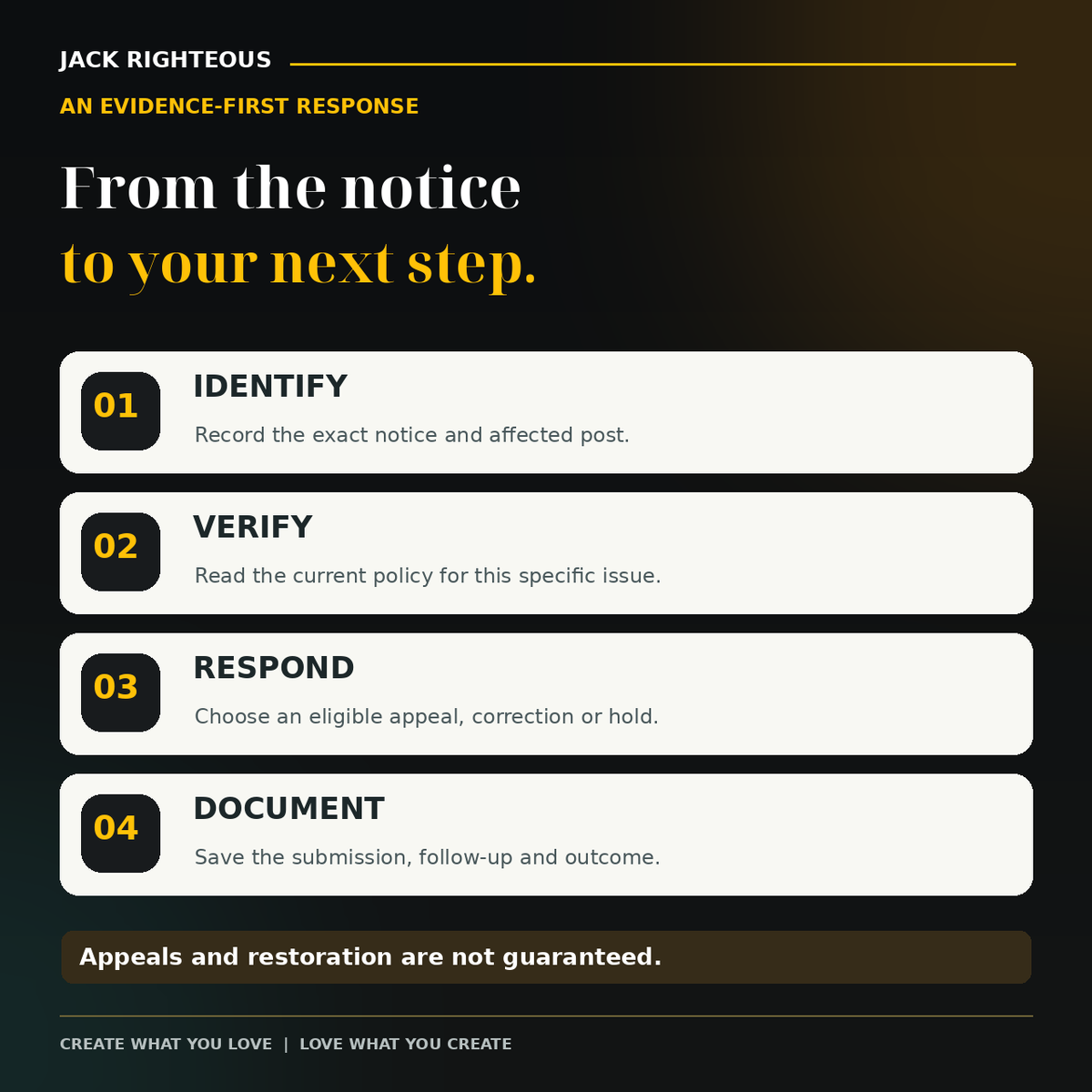
A four-step creator protection process
- Identify: record the exact notice, date, post link and affected feature.
- Verify: consult the linked official TikTok guidance for that specific decision.
- Respond: choose an eligible appeal, sound action, correction, hold or other documented next step.
- Record: save screenshots, permissions, submission details and the outcome in the fillable workbook.
Practice before it happens to you
Work through six guided scenarios, including a muted original sound and restricted video, then use the fully worked appeal example to see what a complete incident record looks like. The scenarios are teaching examples—not guaranteed results or claims about specific creators.
Save a separate workbook copy for each real case using a PDF reader that supports fillable forms. It can also be printed or saved as a PDF where your reader supports that feature.
How this fits with JR training
This is a TikTok-specific policy and incident-response reference, not a video production or campaign-growth course. To plan a seven-post release campaign, use Short-Form Music Campaigns. For broader AI music release readiness, start with the AI Music Release Router.
Already have eligible Creator Library or Complete Access resources? Check your current member downloads and the exact access terms first, so you don't buy an included edition twice. A standalone purchase does not itself grant membership access.
Content violations and appeals · AI-generated content labels · Commercial use of music
Important: TikTok interface options and policies can change. Review the current in-app notice and official help before taking action. Appeals and restoration are not guaranteed. The guide is educational, not legal advice or a promise of account safety, reach or monetization. Digital download only; no physical product is shipped.