Mont-Real Stories: Faith, Culture & Creator Life

Family Bible Quiz: 10 Questions About Ruth, Moses, Jesus and More

Published December 16, 2023Last updated August 20, 2026By Gary Whittaker
What this guide will help you do

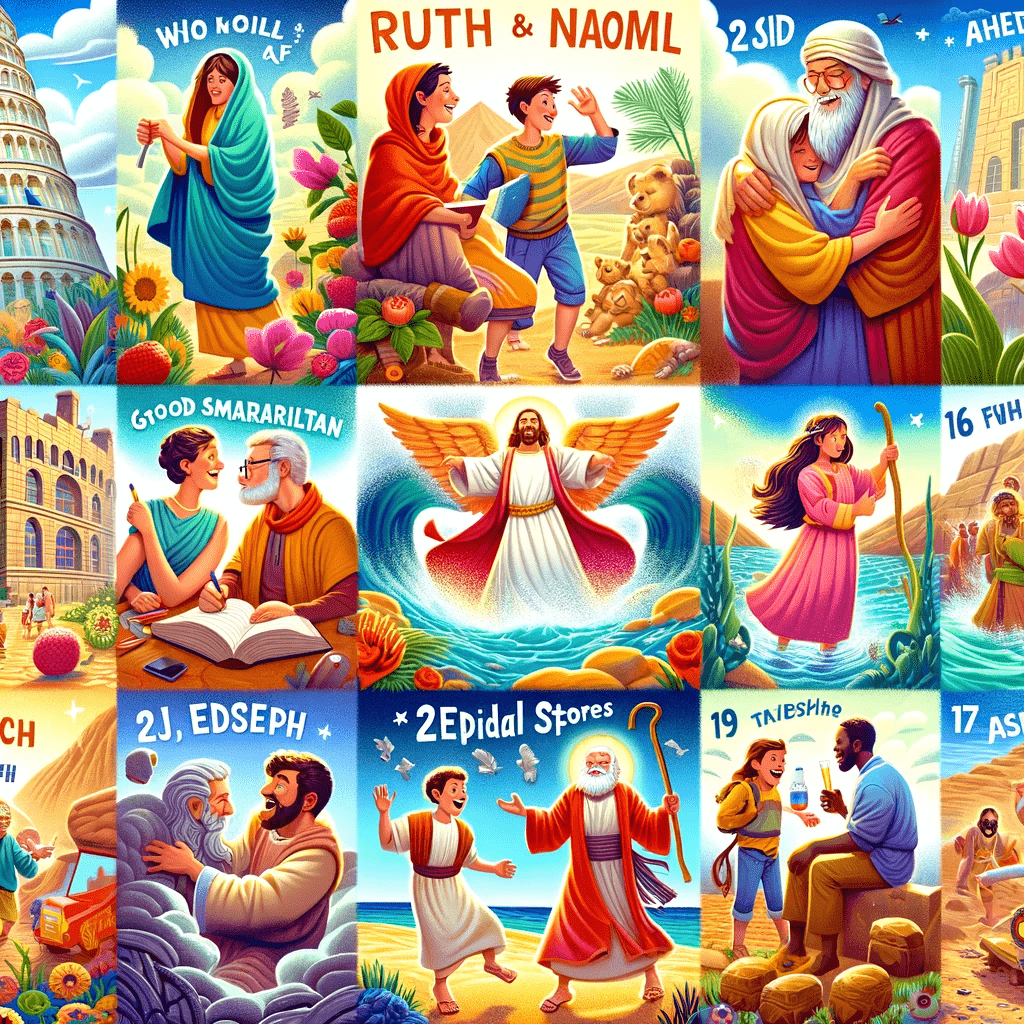
A family-friendly Bible quiz with 10 questions about Ruth, Babel, the Good Samaritan, Mary Magdalene, David, Cana, Ezekiel, the lost son, Joseph and Moses—plus Scripture references and discussion prompts.

Discover Bible Treasures: Family Quiz on Ruth, Moses, Jesus & More" - Jack Righteous
Christian Family · Bible Quiz · Questions 21–30

Family Bible Quiz: Ruth, Moses, Jesus and More

These 10 questions are meant to test recall and then open the Bible. Answer first, check the passage second, and use the discussion prompt to move from remembering a story to noticing what the text actually says.

This quiz is family-friendly, but it is not a replacement for reading Scripture. Some familiar Bible stories become oversimplified when we reduce them to one sentence, so each answer below includes a reference and a short context note.

How to Use This Quiz

Answer before looking.

Give everyone a chance to respond without turning the activity into a race.

Open the passage.

Check the wording and notice details the short answer leaves out.

Ask one real question.

The discussion prompt matters more than the score.

Adapt for age.

Younger children can focus on people and events; older readers can discuss context, motives and interpretation.

The goal is not to prove who knows the most Bible facts. It is to make Scripture easier to open, discuss and remember together.

The 10 Questions

Question 21 · Ruth

Who told Naomi that she would go where Naomi went and stay where Naomi stayed?

Answer: Ruth.

Read
Ruth 1:16–17
Context
Ruth speaks these words in a moment shaped by widowhood, grief, migration and a costly decision to remain with Naomi.
Talk about it
What makes loyalty meaningful when staying with someone is difficult rather than convenient?
Question 22 · Babel

What happened after the builders of Babel tried to make a great city and tower for themselves?

Answer: Their language was confused and the people were scattered.

Read
Genesis 11:1–9
Context
The story connects human ambition, self-exaltation, concentrated power, confused language and scattering. It should not be turned into a simplistic scientific claim about how every human language developed.
Talk about it
Why does the builders’ desire to make a name for themselves matter to the story?
Question 23 · Good Samaritan

In Jesus’ parable, who stopped and cared for the injured man?

Answer: A Samaritan.

Read
Luke 10:25–37
Context
Jesus tells the parable in response to a question about who counts as a neighbour. The Samaritan’s compassion crosses a social boundary his audience would have recognized.
Talk about it
How does the parable move the question from “Who is my neighbour?” toward “How can I act as a neighbour?”
Question 24 · Mary Magdalene

In John’s Gospel, who encounters the risen Jesus near the tomb and is sent to tell the disciples?

Answer: Mary Magdalene.

Read
John 20:11–18
Context
The Gospel accounts present the resurrection morning with different details and emphases. John gives Mary Magdalene a central role as a witness who encounters Jesus and carries the news to the disciples.
Talk about it
What changes in the scene when Mary recognizes Jesus after hearing her name?
Question 25 · David and the Ark

Who danced before the Lord as the Ark of the Covenant was brought toward Jerusalem?

Answer: David.

Read
2 Samuel 6:12–23
Context
The chapter includes celebration, worship and also conflict between David and Michal. Reading the full scene keeps it from becoming only a slogan about expressive worship.
Talk about it
What do joy, dignity and public worship look like in this complicated story?
Question 26 · Cana

In John’s Gospel, what sign is described as the first of Jesus’ signs?

Answer: Turning water into wine at a wedding in Cana.

Read
John 2:1–11
Context
John calls the event a sign and connects it with the revealing of Jesus’ glory and the disciples’ belief.
Talk about it
Why might John call this event a “sign” rather than simply a miracle?
Question 27 · Ezekiel

Which prophet saw a vision of a valley filled with dry bones?

Answer: Ezekiel.

Read
Ezekiel 37:1–14
Context
The passage itself identifies the bones with the house of Israel and speaks hope into the despair of exile. Christian reflection can draw from the imagery without erasing that original setting.
Talk about it
What kind of hopelessness are the exiles expressing, and what promise answers it?
Question 28 · The Lost Son

Which parable includes a younger son who leaves home, returns, and is welcomed by his father?

Answer: The parable often called the Prodigal Son or the Lost Son.

Read
Luke 15:11–32
Context
The father’s compassionate welcome is central, but the story does not end with the younger son. The older brother’s anger and the father’s appeal to him are part of the parable too.
Talk about it
Which character do you notice most—the younger son, the father or the older brother—and why?
Question 29 · Joseph

Who interpreted Pharaoh’s dreams and was placed in authority in Egypt?

Answer: Joseph.

Read
Genesis 41
Context
Joseph’s story includes betrayal, slavery and imprisonment before this moment. The text can teach wisdom and preparation without turning suffering into a promise that every hardship leads to public success.
Talk about it
What practical action does Joseph recommend after interpreting the dreams?
Question 30 · Moses

Who encountered God at a bush that burned without being consumed?

Answer: Moses.

Read
Exodus 3:1–15
Context
The scene is about more than a remarkable sight. Moses is called into a difficult mission, asks questions, and hears God speak about divine presence and name.
Talk about it
What does Moses learn about the task, about himself and about the God who is sending him?

Score Less, Discuss More

0–3 correct: You have 10 good reasons to open the passages together.

4–7 correct: You remember many of the stories; now look for the details that memory compressed.

8–10 correct: Strong recall. The next challenge is context: who is speaking, why the event matters and what the surrounding passage adds.

A score can make the activity fun, but Bible knowledge should not become a way to embarrass younger readers or reward the quickest person in the room. Curiosity is a better long-term goal than competition.

Turn One Answer Into a Family Activity

  1. Choose one of the 10 stories.
  2. Read the referenced passage aloud.
  3. Each person names one detail they did not remember from the quiz answer.
  4. Each person asks one question about the text.
  5. Finish by naming one idea worth remembering during the week.

Continue the Family Bible Quiz

If you want another set, continue with 10 Questions About Amazing Bible Stories or 10 Questions About David, Moses, Jesus and More.

Go Deeper Than the Quiz

Want biblical context, study paths and related Christian articles?

Use Righteous Kingdom as the main Bible study hub.

This family quiz is an educational Bible-study activity. Scripture references are provided so readers can compare the summaries with the translation they normally use.

Create What You Love | Love What You Create.

Continue the wider investigation

Technology is also about control, resources and human consequences.

Continue through Tech Culture & Power for connected reporting on infrastructure, ownership and public impact.

Discussion

Leave a comment

articleall levels
On this page

    Your next move

    Turn the reading into useful work.

    Apply this now

    Complete one action before opening another guide.

    Write down the most important decision this article changes, then apply it to the project while the reasoning is still fresh.

    Continue learning

    Keep the subject connected.

    Use the public library to compare related guidance before changing the project.

    Continue with public guidance →
    Go deeper

    Use structured training for ordered work.

    Move into the member system when the project needs a sequence, templates and application—not another isolated tip.

    Explore structured training →
    Use a resource

    Support the next action.

    Use a workbook, checklist or ASK JACK route only when it reduces friction in the work.

    Open the supporting route →

    The Righteous Beat

    Get the week’s most useful creator guidance, platform changes and free resources.

    Join the free newsletter →