
Jack Righteous Updates: Drops, Tools & Announcements
Hit 'Em Wit Da High Notes: What an Early Suno Instrumental Experiment Taught Me
A retrospective on Jack Righteous’s 2024 instrumental Hit 'Em Wit Da High Notes—why audio statistics and longer generations were not enough, what instrumentals need to develop, and how that early Suno v3 experiment differs from his current workflow.
Creator retrospective · Instrumental AI music · 2024 experiment
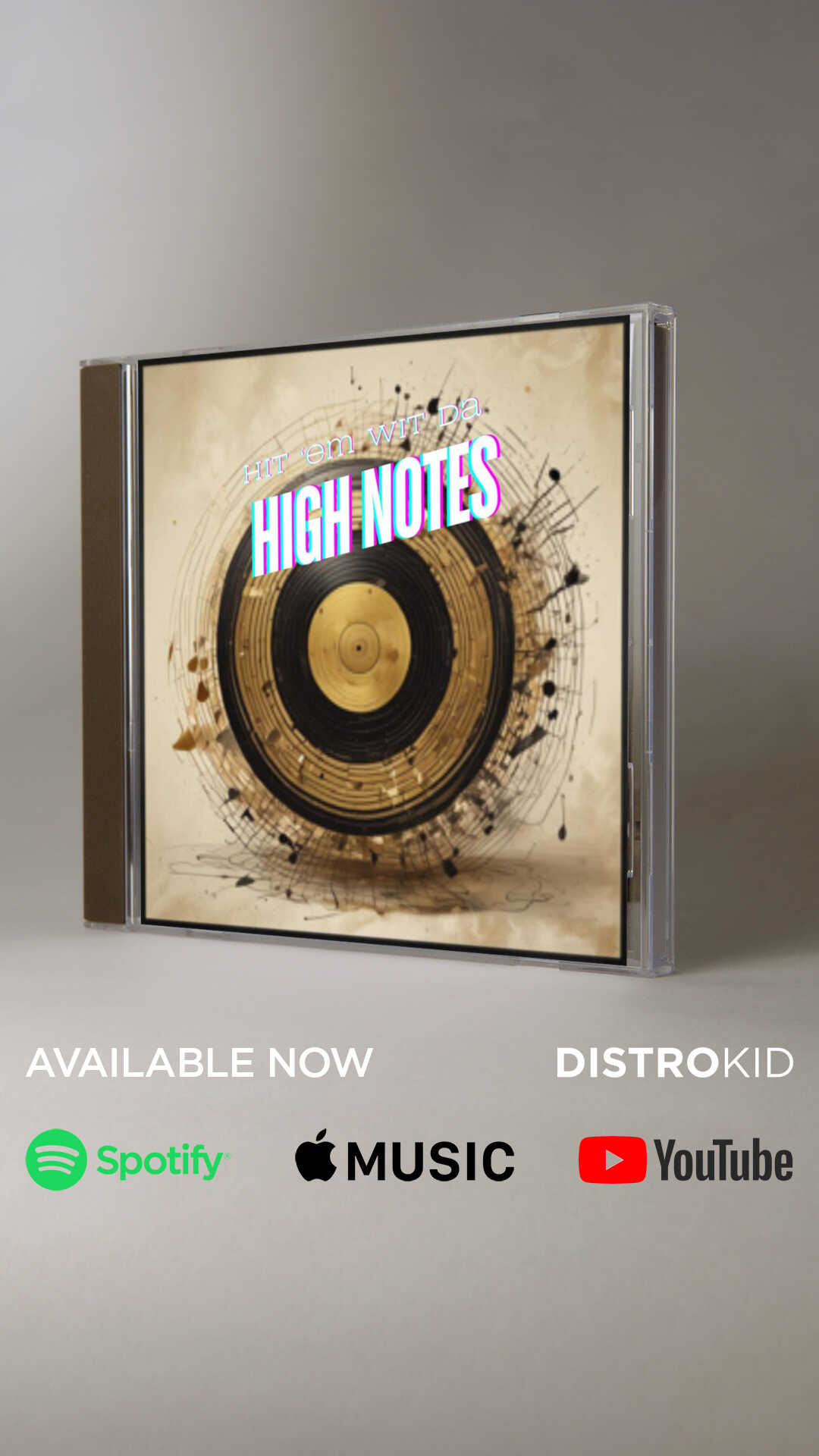
Hit 'Em Wit Da High Notes came from an early stage of my Suno work when simply getting a usable instrumental from generative AI still felt like the headline. The original article mostly described the file with tempo, key and automated mood percentages. Looking back, the more useful lesson is what those numbers could not tell me: whether an instrumental actually develops, creates contrast and gives a listener a reason to stay with it.
The fast answer
This page is now a historical creator case study, not current Suno instructions. The track was made with Suno v3 in 2024 and released as an extended instrumental. I am keeping it public because it shows an earlier stage of the workflow: generate something interesting, extend it, then try to understand the result after the fact. My current process reverses that order by defining the musical job before generating.
Hear the original track
The original release described the piece as mellow, danceable and primarily instrumental. It also recorded the basics: about four minutes long, F minor, 4/4 and 148 BPM. Those details are still useful as a snapshot of the artifact, but they are not an explanation of why the music works—or where it could have been stronger.
Why the old audio percentages were a dead end
The first version of this article leaned heavily on automated labels such as danceability, energy, instrumentalness and valence. That kind of analysis can describe tendencies in a finished file, but it does not tell a creator what decision to make next.
The track is mostly instrumental, moderately energetic or relatively danceable.
Whether the motif earns repetition, whether sections develop, or whether the ending feels intentional.
Purpose, contrast, section roles, selection, editing and the decision to stop generating.
The bigger lesson: longer is not automatically more complete
The track was promoted as an “Extended Version,” which reflects how I was thinking at the time. Length itself felt like progress. Now I would ask a different question: what does the added time do?
An instrumental can be four minutes long and still feel static if the same idea simply continues. A shorter piece can feel complete if it establishes a motif, changes pressure, creates a meaningful contrast and resolves—or deliberately refuses to resolve—the musical idea.
That distinction matters even more with generative music because extension is easy. The hard part is deciding whether the extension improves the composition.
How I would evaluate this kind of instrumental now
I would not begin with “Is the output good?” I would score it against a small brief. For an instrumental, the questions are practical:
- What is the central musical idea or motif?
- What changes after the listener understands that idea?
- Where does energy rise, fall or make room?
- Does each section have a different job?
- Is repetition creating identity or merely filling time?
- Does the ending feel chosen rather than generated?
- Which strong passage is worth preserving if another section fails?
Those questions are more valuable than a mood percentage because they can change the next production decision.
Suno v3 belongs in the history, not the recommendation
The original post highlighted that this was created on a paid Suno plan using v3. I am leaving that fact in the story because it dates the experiment. It should not be read as current platform guidance. The tools, editing options and production workflow have moved far beyond the environment in which this track was made.
What has survived is the need to know what you are trying to build before you ask a model for another version.
Use the current workflow
From early generation to deliberate production
If you are building with Suno now, do not use this 2024 experiment as your how-to. My current workflow starts with a brief, generates controlled comparisons, preserves the strongest foundation and repairs only what failed.
Historical note: Hit 'Em Wit Da High Notes was released in June 2024 during my early Suno period. This retrospective preserves the track while separating the old tool context from the creator principles that remain useful.
Stay connected to what changes
Do not lose the next useful creator update.
The Righteous Beat connects consequential platform changes, practical tools and new free resources.

Discussion