
Mont-Real Geschichten: Glaube, Kultur & Schöpferleben
Family Bible Quiz: 10 Questions About Moses, Jesus, Elijah and More
A family-friendly Bible quiz with 10 questions about Moses, the lost sheep, Solomon’s Temple, Lydia, Elijah, Jesus feeding the 5,000, Naaman, Gideon, Paul in Athens and the New Jerusalem—plus Scripture references, careful context and discussion prompts.
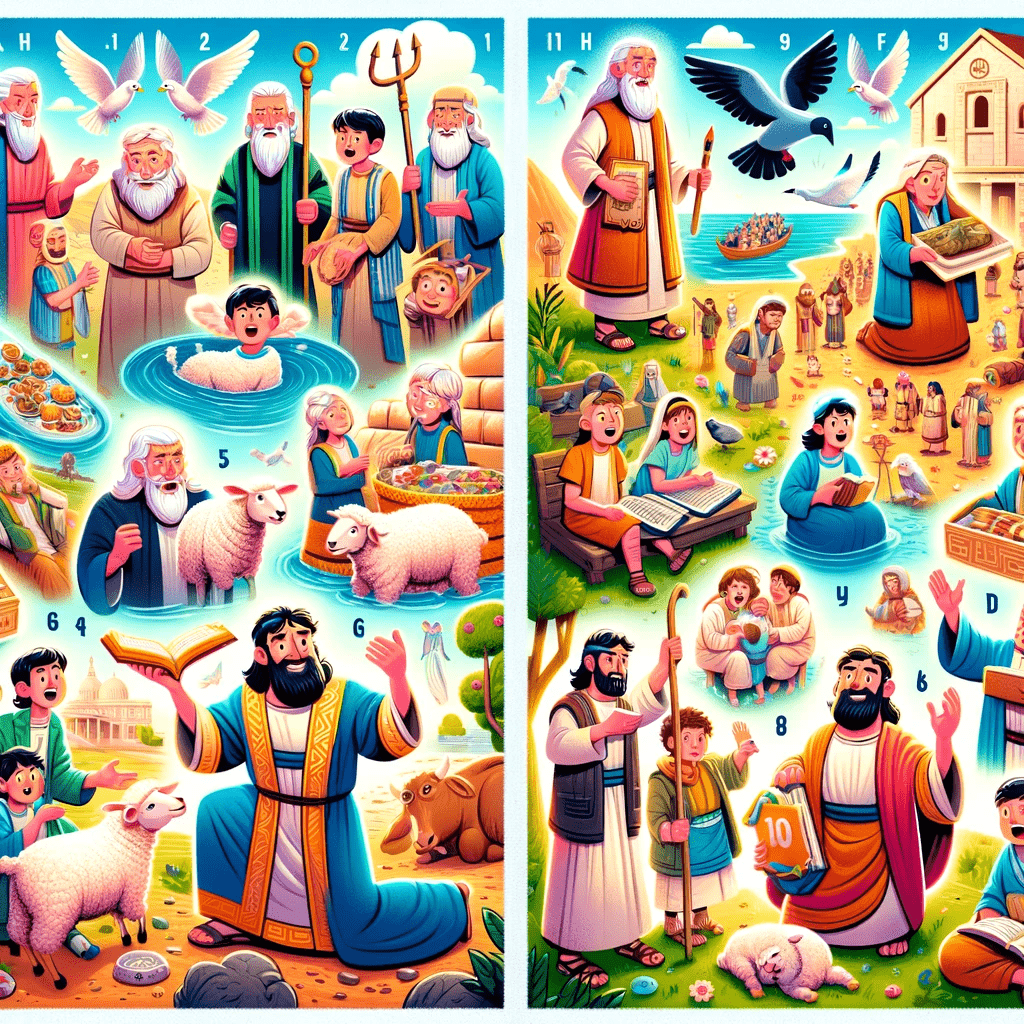
Family Bible Quiz: Moses, Jesus, Elijah and More
This set moves from Sinai and the lost sheep to Elijah, Naaman, Paul in Athens and Revelation’s New Jerusalem. Answer the question first, then read the passage around it. The goal is not to turn Scripture into trivia—it is to use the question as a doorway into better Bible reading.
Each answer below includes a Scripture reference, a context note and one family discussion prompt. Some stories involve illness, warfare, idolatry and end-times imagery, so parents and caregivers should adapt the level of detail to the age and maturity of the children with them.
How to Use This Quiz
Let everyone respond before opening the Bible.
The verse containing the answer is rarely the whole story.
A miracle or provision in one biblical account is not automatically a guarantee of the same result for every believer.
Discussion builds understanding better than simply counting correct answers.
The 10 Questions
Who received the covenant tablets from God on Mount Sinai?
Answer: Moses.
Which parable pictures a shepherd going after one sheep that has gone missing?
Answer: The Parable of the Lost Sheep.
Which king oversaw the building of the first temple in Jerusalem described in 1 Kings?
Answer: Solomon.
Which merchant from Thyatira responded to Paul’s message in Philippi and welcomed his group into her home?
Answer: Lydia.
Which prophet receives food brought by ravens while staying near the Kerith ravine during a drought?
Answer: Elijah.
Who feeds a crowd of about 5,000 men, besides women and children in Matthew’s telling, using five loaves and two fish?
Answer: Jesus.
Which Aramean commander is cleansed of his skin disease after following Elisha’s instruction to wash in the Jordan seven times?
Answer: Naaman.
Which judge is called while Israel is oppressed by Midian and initially questions how God can be with his people?
Answer: Gideon.
Who speaks at the Areopagus in Athens after seeing the city’s many objects of worship?
Answer: Paul.
Who reports the vision of the holy city, New Jerusalem, coming down from God in Revelation 21?
Answer: John, the visionary narrator of Revelation.
What This Set Teaches Beyond Trivia
- Context prevents slogans. Gideon, Naaman and Elijah all become more complicated when the entire narrative is read.
- Miracle stories are not automatic guarantees. Description and promise are not the same thing.
- People on the margins matter to the biblical story. Lydia, Naaman’s servants and the unnamed Israelite girl are not disposable side characters.
- Good communication begins with understanding. Paul knows his Athenian audience, but understanding does not mean surrendering conviction.
- Christian hope is larger than escape. Revelation’s ending points toward God’s presence, renewal and the defeat of death.
A Four-Step Family Study Method
- Observe: What does the passage actually say?
- Compare: Is there another biblical account or nearby passage that adds context?
- Guard against formulas: Am I turning one person’s outcome into a universal promise?
- Respond: What faithful truth, warning, question or practice can we reasonably carry forward?
Continue the Family Bible Quiz
Review Questions 41–50 about Deborah, Jesus, Jacob and more, or return to the Ruth, Moses and Jesus quiz.
Want biblical context, study paths and related Christian articles?
Use Righteous Kingdom as the main Bible study hub.
This family quiz is an educational Bible-study activity. Scripture references are supplied so families can read the passages in the translation they normally use and discuss age-appropriate context together.
Create What You Love | Love What You Create.
Continue the wider investigation
Technology is also about control, resources and human consequences.
Continue through Tech Culture & Power for connected reporting on infrastructure, ownership and public impact.

Discussion