
How I Turned the Garden of Eden Into a Three-Song Biblical Story Arc
Share
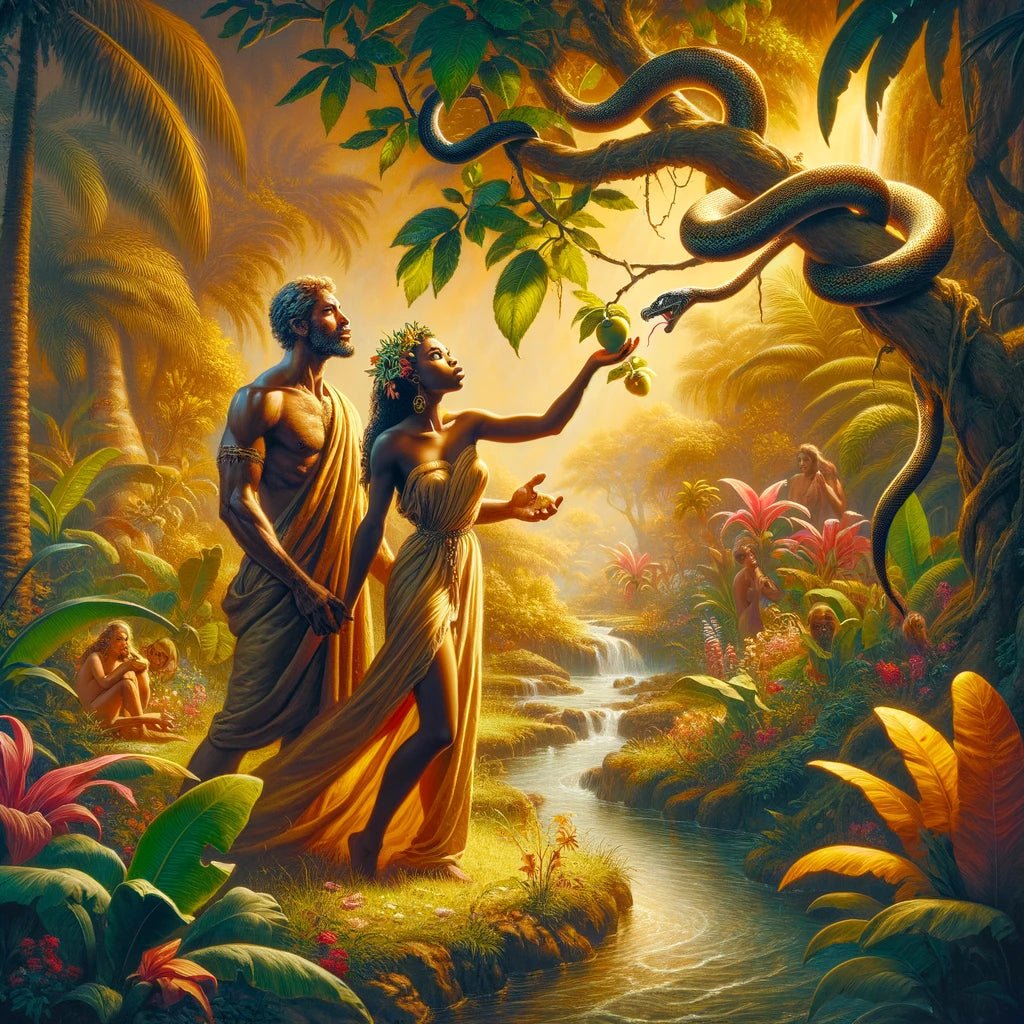
The Garden of Eden three-song arc is an early piece of the musical world I am still building. Rather than treating Genesis 2–3 as a plot summary, I used three songs, three emotional positions and three different musical directions to dramatize how I imagined Adam and Eve moving through temptation, realization and exile.
Important context: this is my dramatic interpretation of Genesis for the musical I am developing. The songs add motives, emotional detail and character perspective that are not always stated explicitly in Scripture. That distinction is part of the creative process, not something I want to hide.
Why I turned one Bible story into three songs
One song could describe the fall. Three songs let me build a dramatic arc. The first can live inside temptation. The second can shift perspective and let Adam react. The third can deal with what happens after the choice has already been made.
That structure also gave me room to use genre as storytelling. Reggae, Afrobeats and a more triumphant final arrangement are not just stylistic changes; each one changes the emotional posture of the scene.
Track 1: Eve's Temptation — reggae
I used reggae here because I wanted the opening to feel warm, grounded and almost deceptively comfortable. In my version of the scene, temptation does not arrive sounding like danger. It arrives inside beauty, curiosity and desire.
The song focuses on Eve's pull toward the forbidden fruit and the transformation that follows. The dramatic question is not simply whether she will eat; it is what changes inside the world once knowledge, desire and choice collide.
What this song is doing dramatically
- places the listener inside temptation rather than observing it from a distance;
- uses a relaxed groove to create tension between beauty and consequence;
- starts the larger arc by making transformation feel personal rather than abstract.
Track 2: Adam's Revelation — Afrobeats
The second song changes the point of view. Instead of retelling Eve's action, I wanted to explore what Adam might feel when he realizes that something fundamental has changed.
My interpretation emphasizes his attachment to Eve and his decision to remain with her even as the consequences become clear. That is a dramatic choice I am making for the play. Genesis gives me the event; the musical asks me to build a character who can carry that event emotionally onstage.
Afrobeats gives the song more movement and urgency than the first track. The shift in rhythm helps signal that the story is no longer suspended in temptation. A decision now has momentum.
What this song is doing dramatically
- changes perspective from Eve to Adam;
- turns biblical event into character motivation;
- raises the emotional stakes by making relationship part of the consequence.
Track 3: Let's Go My People — departure
The final song is intentionally not written as if exile were a victory. The loss of Eden matters. What interested me dramatically was what Adam and Eve do after loss becomes unavoidable.
That is where the more triumphant musical energy comes from. In my developing play, the scene is about movement: they cannot return to what was, so the story has to continue outside the Garden. The anthem gives them enough unity and resolve to step into that next act without pretending the fall itself was something to celebrate.
What this song is doing dramatically
- moves the story from consequence into continuation;
- lets resilience exist without erasing loss;
- closes one arc while opening the larger world of the musical.
The bigger lesson: adaptation requires decisions
Working from Scripture does not remove creative responsibility. It increases it. I have to decide what the biblical text actually gives me, what I am interpreting, what I am inventing for dramatic purpose, and whether those choices still respect the spiritual weight of the source.
That same method now shows up across other Jack Righteous biblical music experiments. Forbidden Paradise explores Genesis through a different musical lens. Blood in the Sand moves into Cain and Abel. Stone & Faith uses genre contrast to dramatize David and Goliath.
Together, these are not isolated novelty songs. They are part of the longer process of learning how faith, character, genre and AI-assisted production can support a coherent dramatic world.
Hear the complete three-song arc
If you want to hear the three pieces together as one early musical-development experiment, the complete Garden of Eden package is still available in the Jack Righteous store.
Where this fits in the developing musical
This article now serves as a record of one of the early building blocks: taking a biblical source, giving characters a point of view, assigning musical language to each dramatic beat, and testing whether several songs can carry one continuous story.
The project is still developing. That matters because I do not want these early tracks presented as a finished theological statement or a closed creative product. They are evidence of the world being built in public.
Build your own connected Christian music project
This published Garden of Eden experiment is a case study of decisions, not a production recipe. If you already have one song worth keeping, take the next step in the Christian Music Catalog Builder. It uses this arc as a worked example and asks you to prove your own project can carry its identity across a real second-song test. Still planning the first song? Start free here.
