
Build a Reusable Suno V6 Style Framework | Member Training
Build a Reusable Suno V6 Style Framework
Translate the Sound Target into the smallest useful set of instructions for the generation you are testing.
First: separate the jobs
- Global identity: traits that should survive across songs.
- Song-specific direction: tempo, concept, instrumentation variation and other decisions allowed to change.
- Section behavior: what verse, chorus, bridge or other regions should do differently.
- Lyrics / structure: the actual words plus section labels when structure needs to be explicit.
- Repair instruction: when editing a keeper, state what should change and what must survive.
V6 can understand natural-language direction. The bracketed placeholders below are a training scaffold; replace them with real values.
Reusable Style Prompt template
Editable style prompt — tap/click and replace the brackets
Reusable structure map
Editable song structure
[Verse 1]
...lyrics...
[Pre-Chorus]
...lyrics...
[Chorus]
...lyrics...
[Verse 2]
...lyrics...
[Bridge]
...lyrics...
[Final Chorus]
...lyrics...
[Outro]
Edits stay in the page while it is open. Print / Save PDF before refreshing or leaving if you want to keep them.
Do not give every instruction equal weight
A useful advanced brief has hierarchy. Build it in this order, then compress it:
Editable Prompt Hierarchy
B. [SONG-SPECIFIC DECISIONS] = what is unique to this record
C. [SECTION BEHAVIOR] = where density, width, vocal intensity or groove changes
D. [PRODUCTION / MIX CHARACTER] = depth, width, transient feel, low-end behavior, intimacy/scale
E. [BOUNDARIES / AVOID] = only the off-target traits that matter
F. [TEST VARIABLE] = the one element being deliberately changed in this pass
Prompt compression test: after writing the full brief, remove any adjective that does not change a musical decision. A shorter high-priority brief can be more controllable than a long list of loosely related descriptors.
Section behavior beats repetition. Instead of writing “big chorus” three times, specify what makes it bigger: wider guitars, denser harmony, stronger drum transients, additional backing vocals, higher vocal register or a broader melodic span.
Neutral example: cinematic soul-pop
Example — not your worksheet.
Identity: intimate searching vocal, warm harmonic bed, gradual emotional expansion.
Song-specific: slow steady pulse; piano + restrained strings.
Section behavior: sparse verse → wider chorus through backing layers and sustained vocal phrasing.
Production: warm, spacious, high-detail, controlled low end.
Avoid: oversized trailer drums and glossy dance-pop synths.
Case Study: Borja / Dante9
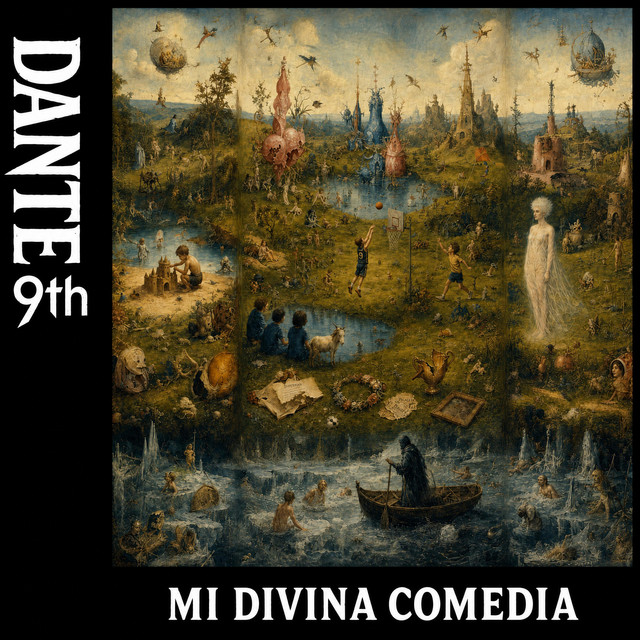
Borja · Dante 9th
Borja is the creator behind Dante 9th, a Spanish-language virtual rock project moving through melodic alternative rock, post-grunge and pop-rock.
Featured album: Mi Divina Comedia
Melodic alternative rock with post-grunge weight and pop-rock clarity; reflective, tense and emotionally direct. Steady mid-tempo band groove. Spacious clean electric guitars create verse air; choruses add thicker distorted layers, grounded bass and stronger natural drum impact. Lead vocal stays vulnerable and conversational in verses, then adds urgency and controlled grit in hooks. Build from intimate verses into broad memorable choruses without turning triumphant. Modern polished band production, natural drum weight, controlled width. Avoid metal screaming, shiny dance-pop textures, excessive synth leads and hyper-busy fills.
Advanced test variable: Borja should not change vocal behavior, guitar density, drum impact and tempo simultaneously. Pick one, create a controlled comparison, and record what the change actually did to Dante9 identity.
Controlled comparison
If the result misses, diagnose the layer before adding words. Change one meaningful variable—vocal behavior, section contrast, guitar role, groove or production character—while keeping the rest as stable as practical.
Identity is more important than prompt length. A reusable framework succeeds when a different song can still feel related without reproducing the same melody, lyric or arrangement.
Continue to Part 3 →